
· By Ahsan, Manager, SS Automotive Group
Smash Repairs Explained: What Happens After You Lodge a Claim
After you lodge a claim, the smash repair process usually runs in this order: the insurer responds, the repairer assesses and quotes, the insurer approves, and the car is then stripped, repaired, painted, reassembled and checked. The most common hold-up is hidden damage found once the bumper comes off, which needs a supplementary quote. Knowing where those hold-ups sit makes the wait easier to live with.
Smash repair is the panel, structural and paint work done to fix a car after a collision. A supplementary quote is an extra quote, with photos, that the repairer sends the insurer when the strip-down reveals more damage. Paint blending is fading new paint into the neighbouring panels so there's no visible line where old paint meets new.
Key Takeaways
- Moneysmart says the insurer must contact you within 10 business days of the claim.
- The first quote can change. Hidden damage behind a bumper is common, and a supplementary quote is a normal part of the process. For minor damage, see bumper, dent and scratch repairs.
- Each damaged part is repaired or replaced depending on how far it's stretched, what it's made of, safety and parts supply.
- Paint is matched to the car, usually blended into the panels next to it, and cured in a spray booth.
| Stage | What happens | Possible hold-up |
|---|---|---|
| Claim lodged | The insurer contacts you and accepts, rejects or asks for more information | Missing information |
| Assessment and quote | The repairer photographs the damage and sends an itemised quote to the insurer's assessor | The assessor queries items or inspects the car |
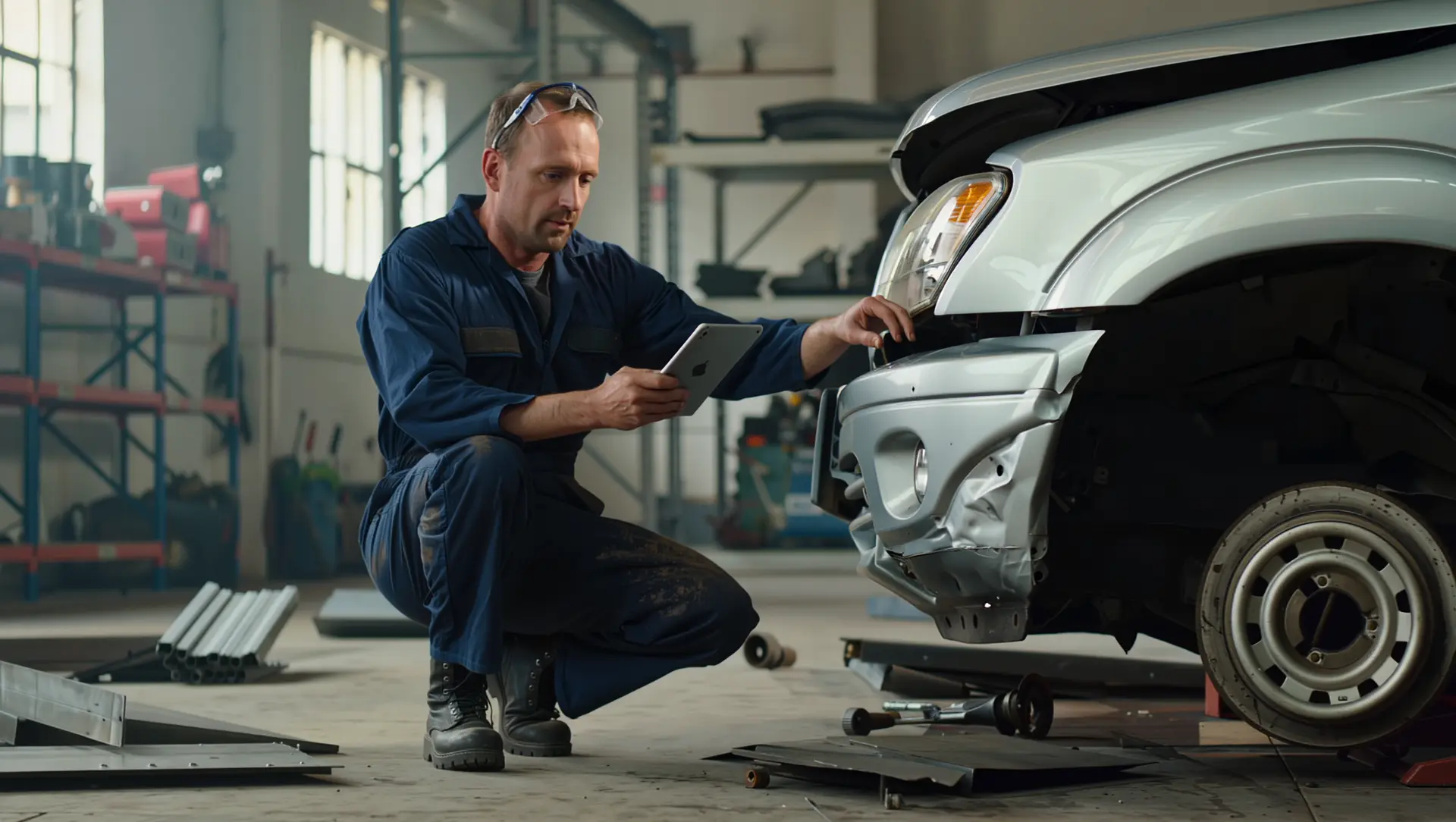
| Strip-down | Bumpers and trim come off and hidden damage is found | A supplementary quote needs approval |
| Repair or replace | Panels are straightened or replaced | A back-ordered part |
| Reassembly and checks | Parts go back on; gaps, lights, sensors and a road test are checked | Driver-assist systems need calibrating |
Before the car reaches the workshop
Your insurer has a few jobs to do first. Moneysmart's guide to claiming on your car insurance says the insurer must contact you within 10 business days of the claim. It may accept the claim, reject it or ask for more information. If it rejects the claim, it must tell you in writing.
This is also when you tell the insurer which repairer you'd like to use, if your claim allows a choice. Our smash repairs page covers the panel and paint work we do. If the crash wasn't your fault, our not-at-fault claims service takes it from the claim number. That includes the insurer, towing and, once the claim paperwork is finalised and the car is dropped off, a replacement car.
The first assessment, and why the quote can change
The repairer photographs the damage, records the vehicle details and paint code, and writes an itemised quote. It lists which panels will be repaired, which will be replaced, the paint work, and the labour to remove and refit bumpers, lights and trim. The quote and photos go to the insurer's assessor. The assessor may approve it as written, query particular items or arrange to inspect the car.
A front or rear impact rarely stops at the bumper cover. Behind it sit foam absorbers, brackets, reinforcement bars, parking sensors, the radiator support and, on many newer cars, a radar unit. Some of that damage only shows once the bumper comes off. When the strip-down reveals more, the repairer sends the insurer a supplementary quote with photos, and the insurer reviews that as well. It's a normal part of the smash repair process, and one of the main reasons a job takes longer than the first look suggested. For a realistic picture of the stages, here's how long a car insurance claim usually takes.
Repair or replace?
Every damaged part gets the same question: can it be brought back to its original shape and strength, or does it need replacing? A few things usually decide it:
- How far the metal has stretched. A shallow dent in a flat panel can often be worked out; a sharp crease along a body line often can't.
- What the part is made of. Aluminium and high-strength steel behave differently from mild steel, and car makers set limits on what can be straightened or heated.
- Plastic bumpers with tears or broken mounting tabs, which are usually replaced rather than patched.
- Anything structural or safety-related, where the manufacturer's repair method comes first.
- Parts supply. A back-ordered part can hold up a job that is otherwise finished.
If the cost of repairs gets close to the car's insured value, the insurer may decide to write the car off instead. That decision sits with the insurer and depends on your policy.
Damage you can't see from the kerb
A hard hit can move more than panels. Suspension arms, steering parts, wheels and cooling parts can be bent or cracked by the same impact. A car that looks straight can still pull to one side or wear a tyre unevenly. Structural repairs are measured against the manufacturer's body dimensions. It's worth having the brakes and suspension checked as part of the job rather than finding a problem months later.
Driver-assist systems need attention too. Windscreen cameras, radar and parking sensors can be knocked out of position. Many cars need them calibrated to the maker's procedure after a repair, so that features such as automatic emergency braking work as intended. We do this ADAS recalibration after repairs.
Paint: matching, blending and curing
Every car has a paint code, but the code is only a starting point. Shades vary between production batches, and the original finish changes after years of Melbourne sun. So the painter checks the mixed colour against the car and usually blends it into the neighbouring panels, so there's no visible line where old paint meets new.
After filler, primer, sanding and masking, the paint goes on in a spray booth. That's an enclosed, filtered room that keeps dust out of the wet finish and controls the temperature while it cures. At SS Automotive, painting is done in our own in-house spray booth.
Reassembly and final checks
Once the paint has cured, everything that was removed goes back on. The repairer then checks panel gaps, the finish under good light, the doors, bonnet and boot, and that the lights, sensors and warning lights behave. A road test confirms the car drives straight without new rattles or wind noise.
A checklist for collection day
Before you drive away, take five minutes in daylight:
- Look along the repaired panels at a low angle for ripples, colour differences or overspray on rubber and glass.
- Check the gaps between repaired panels and their neighbours are even.
- Open and close every door, the bonnet and the boot on the repaired side.
- Start the car and check the dash for warning lights.
- Test the parking sensors, reversing camera and any driver-assist features.
- Ask for the invoice and the warranty terms, and keep them with the car's paperwork.
Raise anything that doesn't look right before you leave. Our panel and paint workmanship carries a lifetime warranty for as long as you own the car. It doesn't cover new damage, normal wear or parts covered by the manufacturer's own warranty.
If you and the insurer don't agree
If you disagree with the repair scope or a write-off decision, start with the insurer's internal complaints team. If that doesn't resolve it, you can take the complaint to the Australian Financial Complaints Authority, which is where Moneysmart says to go if you're still not happy. Every claim depends on your policy and the insurers involved. We look after the practical side of a claim, but we can't give legal advice or promise what an insurer will decide.
Common questions
Why did my smash repair quote go up?
Usually because the strip-down found damage that wasn't visible at first. Behind a bumper cover sit absorbers, brackets, reinforcement bars, sensors and sometimes a radar unit. When more damage shows up, the repairer sends the insurer a supplementary quote with photos for review. It's a normal part of the process.
Will the new paint match the rest of my car?
That's the aim of matching and blending. The paint code is only a starting point, because shades vary between batches and the original finish changes after years of sun. The painter checks the mixed colour against the car and usually blends it into the panels next to the repair, so no line shows.
Have a claim number ready? Start your claim online or call us on 03 8774 5785. Paying for a smaller repair yourself? Book a repair assessment at our Dandenong workshop.
About this guide
Written for SS Automotive Group and reviewed by Ahsan, our Manager, at our workshop at 5 Quinn Street, Dandenong. AI writing tools help us draft some guides; a person checks every fact against the sources linked in it. Read our editorial policy, or contact us if something here is wrong or out of date.
Not your fault?
Send us your claim number.
Towing arranged 24/7 on 03 8774 5785. We deal with the insurer, and once the claim paperwork is finalised and you drop your car off, you get a replacement car. Replacement cars are arranged through an authorised rental company, and fuel, tolls and fines during the hire are your responsibility.
Call 03 8774 5785 Start Your Claim